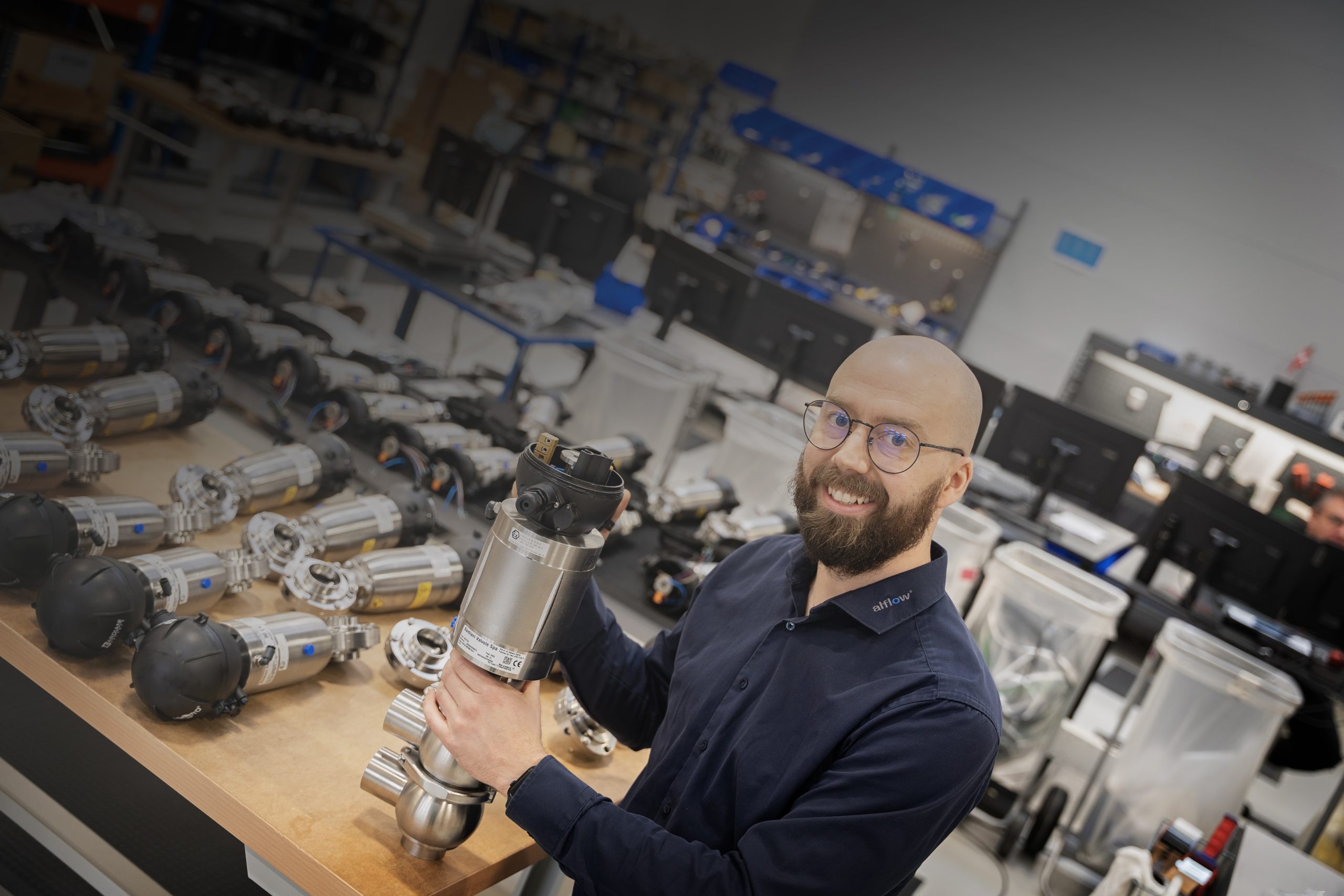
ATEX is about more than just correct equipment. It is about advice, documentation and solutions that can be used safely in explosive environments. At Alflow, we help customers from their initial questions to the finished solution.
Within the pharmaceutical industry, where they work with highly flammable substances such as ethanol, ATEX requirements are a standard part of everyday life. This is also where a large proportion of our customers are located.
Our role as an adviser
Our task does not start with delivering a product. It starts with asking the right questions. What zone is the equipment located in? What equipment category does the environment require? Which gases or types of dust are present? What temperature requirements apply? That requires professional insight to navigate, and that is the dialogue we have with our customers to ensure they get the right equipment for their specific environment.
More than distribution
In some cases we go a step further. When customers need component assemblies that cannot be bought ready-made, we build them ourselves. This requires risk assessments, user manuals and EU declarations of conformity, and we are audited by a third party in accordance with the ATEX directive. For our customers, this means they can come to us with complex requirements and get not just a product, but a solution they can rely on.
What is ATEX?
ATEX is a European regulatory framework that applies to both explosive atmospheres and the equipment used within them. It classifies zones according to risk and sets requirements for how equipment is designed, installed and used to prevent ignition and ensure safety.