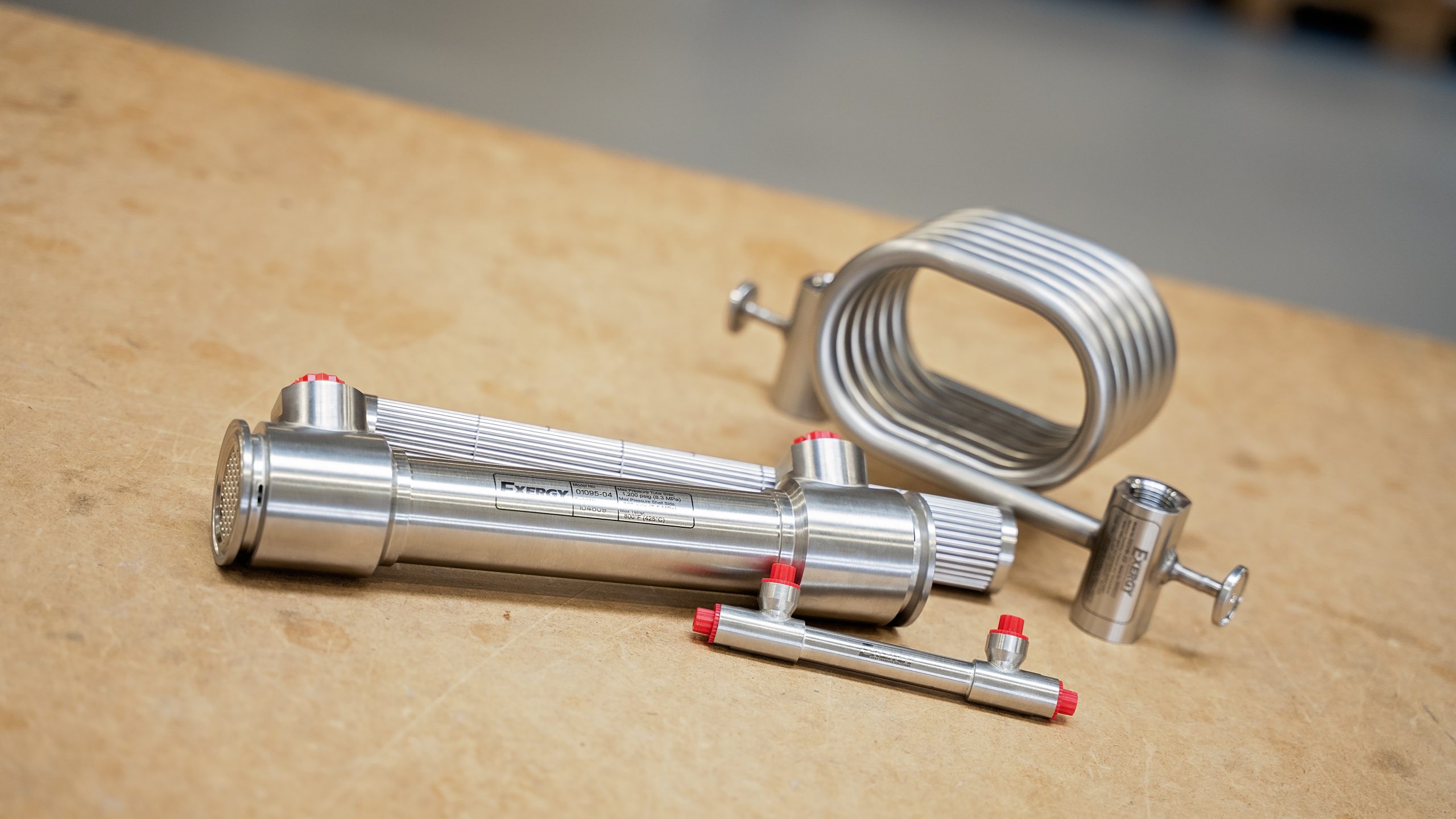
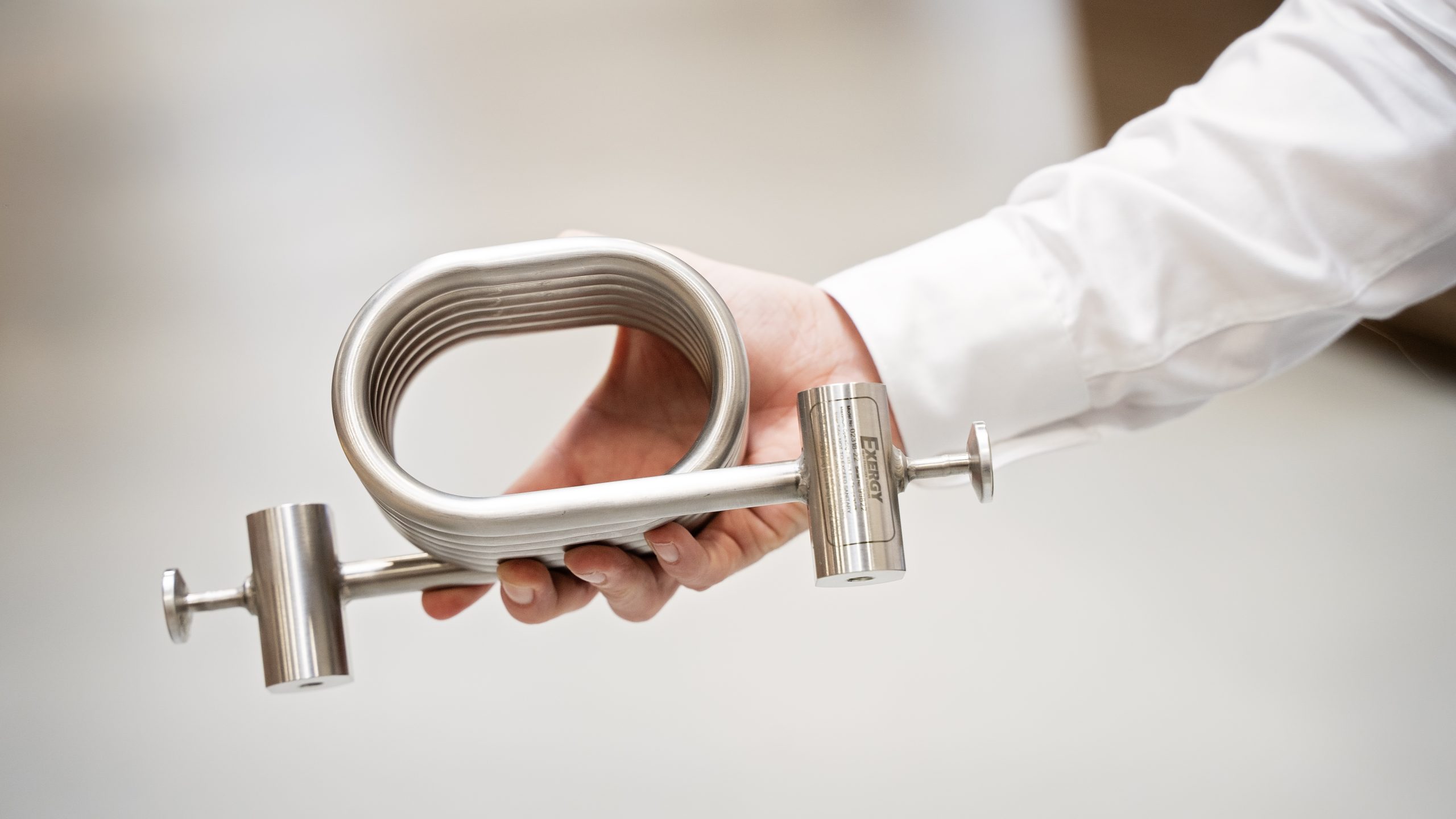
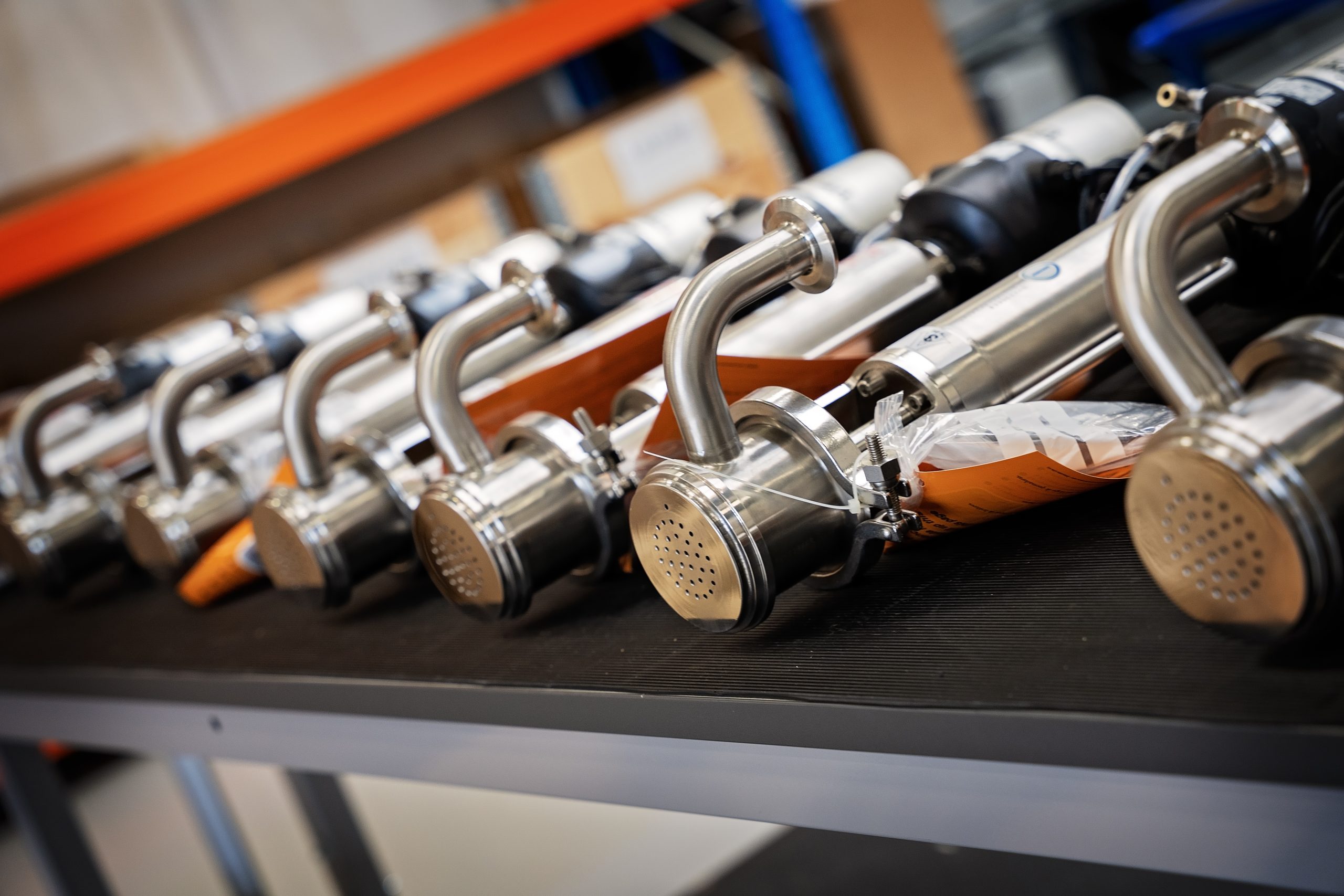
Instead of the long, heavy unit, we chose a compact shell/tube exchanger that was sized for the same cooling task but measured only 76 cm in length and weighed 16 kg. The chosen solution did not require a crane, required less space around the installation, and could be handled by technicians without special lifting equipment. The compact solution also provided better heat transfer coefficient and thus lower cooling water consumption for the same ΔT.
Why compact design helps
Compact heat exchangers Exergy achieve high thermal performance through the tight packing of small tubes, which increases the heat transfer area per volume. This means that for the same heat output, it is possible to significantly reduce the physical volume and mass, which directly affects handling, assembly time, and support requirements.
Technical highlights
High power in a small volume: Compact construction with many small pipes provides a large heat transfer area per volume.
Materials and finish: Construction in 316L SS with the option of electropolishing and surfaces below 0.5 µm Ra, which supports hygiene requirements and validation.
Operation and cleaning: Fully drainable design on the product page (with the correct installation and orientation) and CIP/SIP compatibility ensure that the unit can be integrated into existing cleaning and validation procedures.
Safety against cross-contamination: Option for double tubesheet or similar construction that separates the product and service medium, if this is a requirement in the application.
Low operational requirements: High heat transfer efficiency reduces the cooling water requirement and can lower the load and requirements of the pump and cooling system.
Conclusion
Choosing a heat exchanger involves more than raw thermal performance. In this case, the compact solution provided the same technical functionality, but with significant practical advantages: weight reduction from 244 → 16 kg, length reduction 2.8 m → 76 cm and lower cooling water requirements. The chosen solution reduced installation complexity, reduced space requirements, and simplified operational and validation work without compromising hygiene requirements or performance.