Pigging in the food industry
– Less waste, faster cleaning and better utilisation of raw materials
10 min
In the food industry, significant value can be hidden in what immediately appears to be minor residues. When sauces, dressings, dairy products, syrups, chocolate, juice, beer, wine or other liquid and viscous products are pumped through pipelines, product is typically left behind in the pipes after production ends or when switching to a new batch. Without product recovery, the residual product is often flushed out with water or sent on to the wastewater system. This means a loss of raw materials, longer cleaning times and a higher consumption of water, energy and cleaning agents.
What is pigging?
Pigging is a method for recovering residual product from process lines before the pipes are cleaned. The specially designed “pig” is sent through a pipeline to push the residual product out of the pipe. It has a diameter that matches the pipework so that it can push the product residues towards a receiving station. It is normally propelled through the pipe by means of air, water or another suitable driving medium, depending on the product, process and hygiene requirements.
The purpose is not to replace cleaning, but to remove the vast majority of the product before the cleaning process begins. Once the pipe is emptied more effectively, there is less product film and fewer residues left for the CIP process to remove. This can result in shorter cleaning cycles, lower water consumption and less strain on the wastewater system.
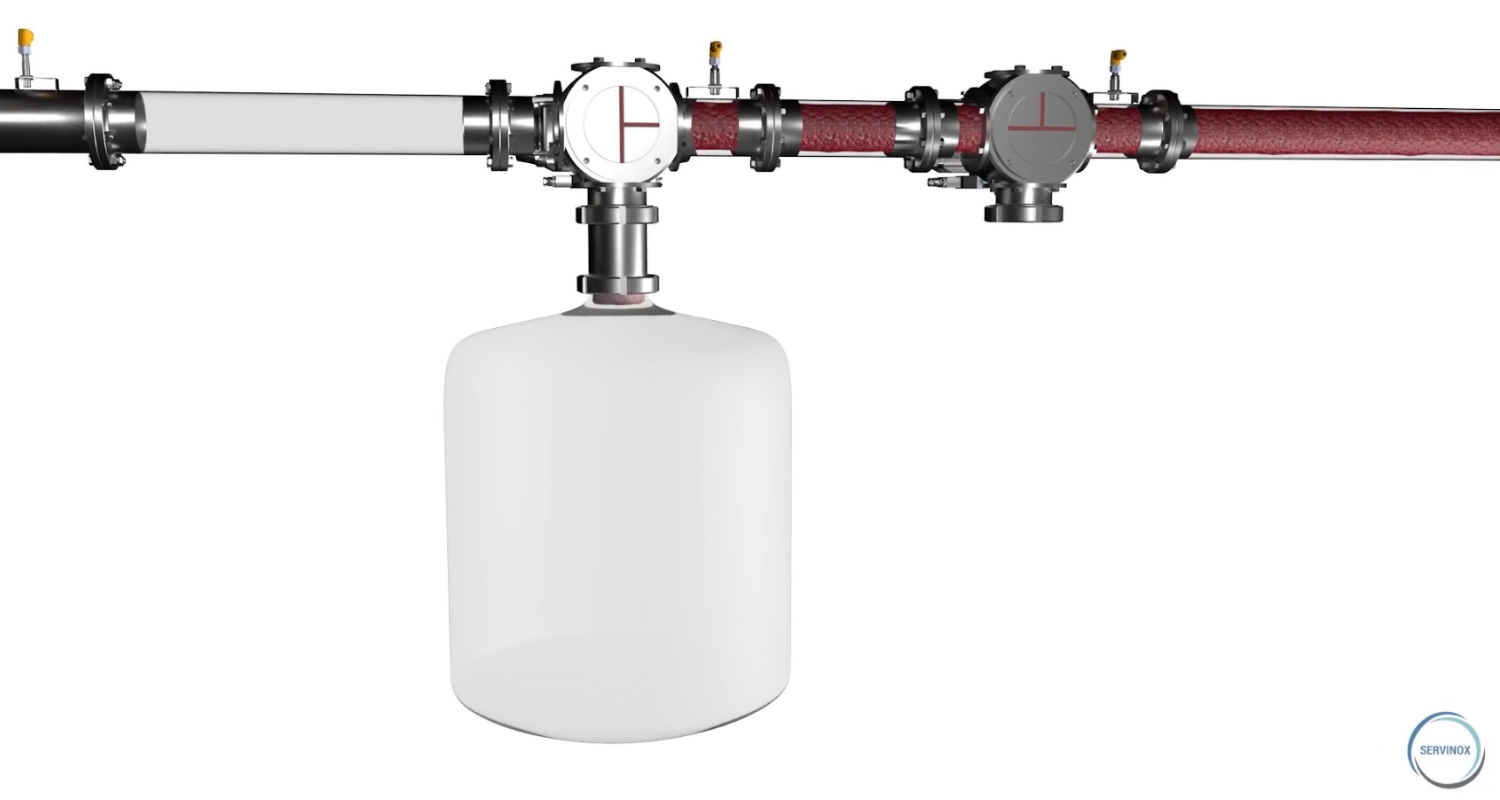
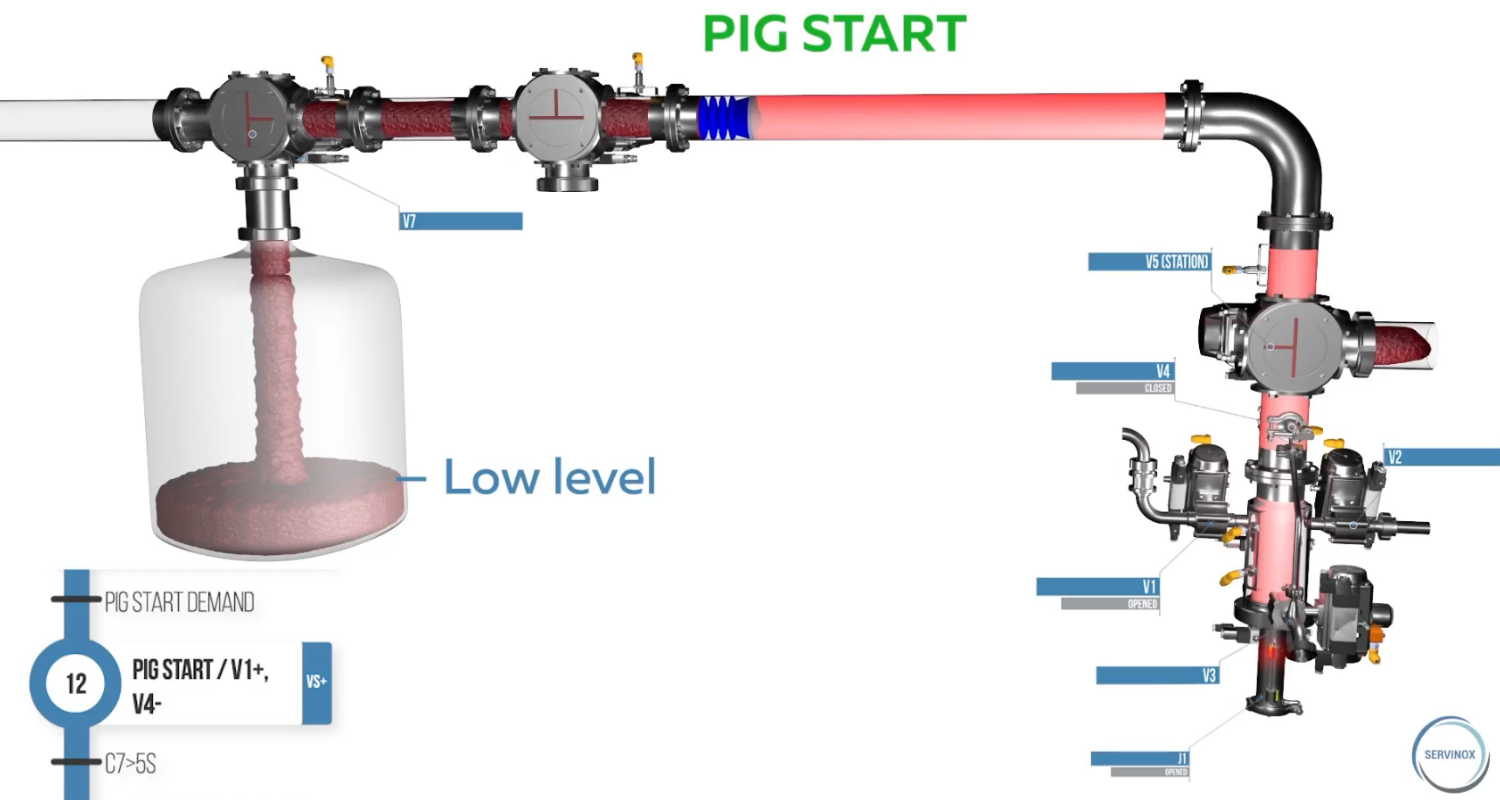
Here the product is seen in the pipeline. After transfer, there will normally be a residual amount of product left in the pipe, which would otherwise have to be rinsed out or end up as product loss.
Is pigging relevant in food production?
In food production, efficiency is not just about speed. It is also about making better use of raw materials, reducing waste, and ensuring that production lines can switch between products without unnecessarily long downtime. Many food manufacturers deal with frequent batch changes, multiple variants, and increasing demands for documentation, food safety, and sustainability. Here, pigging can be an effective way to optimise the process.
The technology is particularly relevant for products that are either expensive, sticky, viscous or difficult to rinse out of pipework. This could, for example, be sauces, dressings, yoghurt, syrup, concentrates, chocolate, purées, creams, dough-like mixtures and other products where even minor residues in the pipe system quickly turn into significant losses over time.
Less product waste and better yield medical pigging
One of the main benefits of pigging is that the residual product can be recovered instead of being flushed out. In many production processes, the product left behind in the pipes is fully usable. If it can be fed back into the process in a controlled manner, forwarded to packaging or collected correctly, it can noticeably improve the yield.
Several suppliers and industry sources state that, in suitable applications, modern hygienic pigging systems can recover up to around 99–99.5 % of the residual product in the pipework. However, the actual efficiency depends on the pipe design, the viscosity of the product, the pipe diameter, the valves, the process layout, the temperature and how well the system is integrated into the overall process.
For businesses with high-value products, even small improvements in product yield can have a major financial impact. The more frequently batches or product variants are changed, the greater the total gain, because otherwise the loss is repeated with every single change.
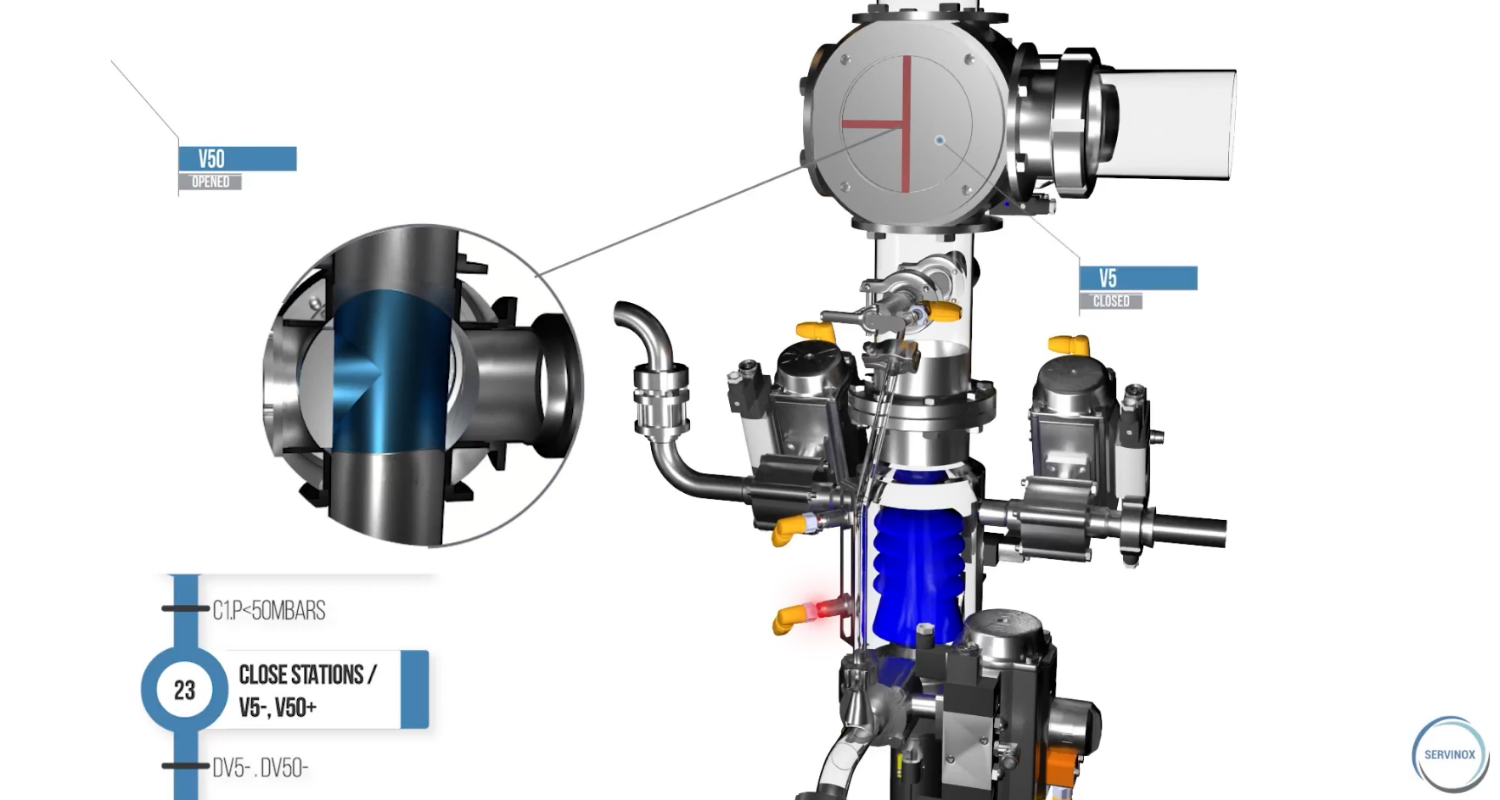
She starts pigging. The pig is sent into the pipeline and moves through the pipe using a driving medium. It acts as a piston and pushes the remaining product in front of it.
Does pigging give shorter cleaning times and a lower CIP load?
Clean-in-place, or CIP, is a central part of food production because pipes, tanks and process equipment must be cleaned without necessarily being dismantled. A CIP process typically uses water, temperature, flow and cleaning chemistry to remove product residues and ensure a hygienic process line.
Pigging can make the CIP process more efficient because the pipes are emptied far better before cleaning starts. When there is less product left in the pipes, less time and fewer resources are needed to rinse out product residues. This can reduce the consumption of water and cleaning agents, shorten cleaning time and increase the time the production line can actually produce.
Lower water consumption and less wastewater
When residual product is rinsed away with water, both product loss and a larger volume of wastewater occur. The wastewater may contain organic residues, fat, sugar, protein, colourants or other components that can be expensive and resource-demanding to handle. By recovering the product before rinsing, the amount of product in the wastewater can be significantly reduced.
Pigging can therefore be an important contribution to both economy and sustainability. Less product waste means better utilisation of raw materials, while lower water and chemical consumption can reduce operating costs and environmental impact. For companies with goals of lower resource consumption, less waste and more efficient production, pigging can be a concrete process improvement with a direct measurable effect.
Reduced risk of cross-contamination
When changing products, it is important that residues from the previous product are not mixed with the next one. This applies in terms of quality, allergens, taste, colour, and food safety. Pigging can help to remove the product more controllably from the pipework before the next product is sent through the line.
This does not mean that pigging alone is a hygienic guarantee. The system must be designed correctly, and it must form part of the company's overall cleaning, validation and food safety programme. However, as a pre-treatment prior to CIP, pigging can reduce the amount of residual product and thereby make the subsequent cleaning more efficient and more consistent.
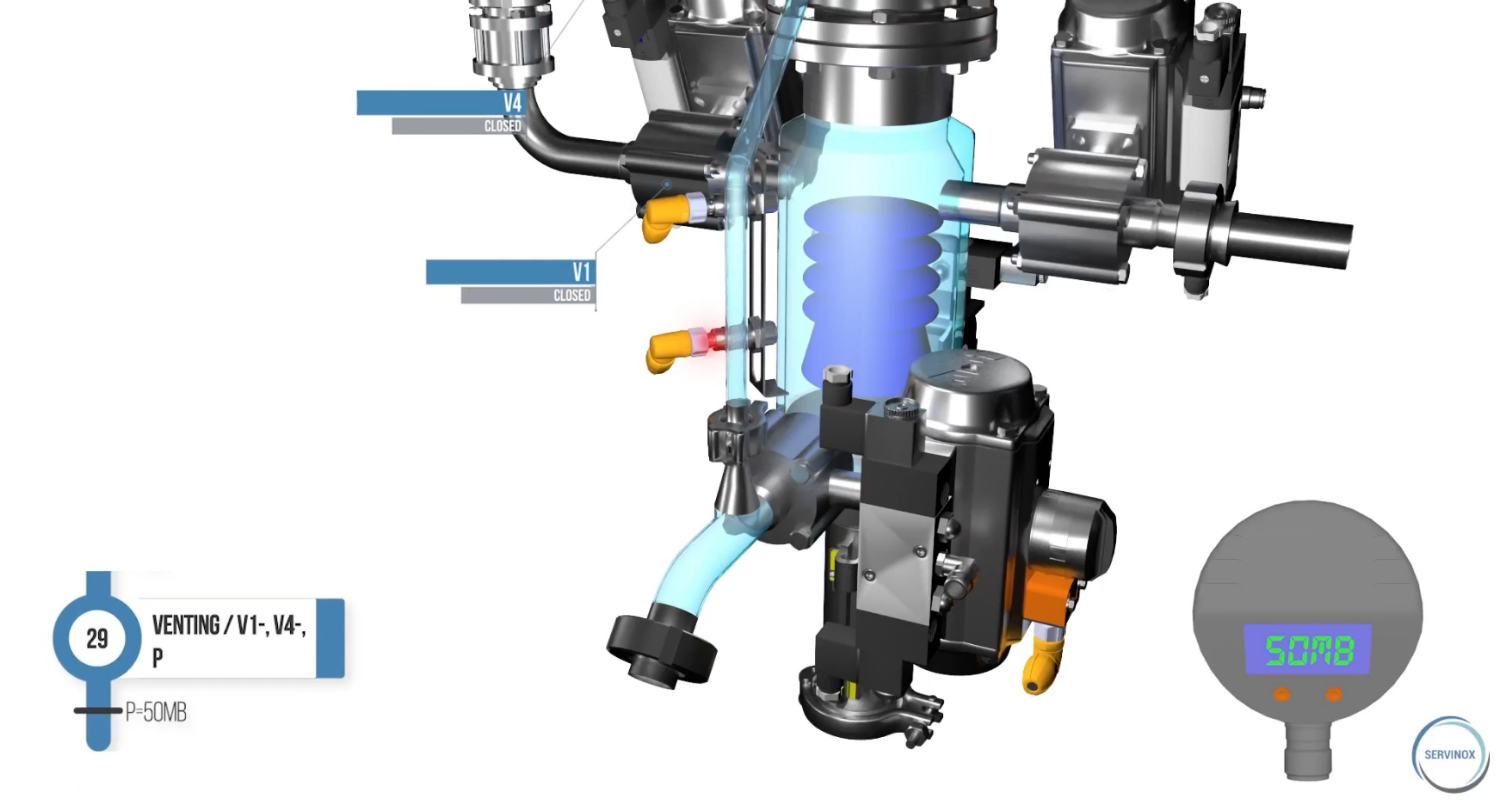
Here the pigging sequence itself is completed, and the station is returned to the required position for the next part of the process.
Which products are suitable for pigging?
Pigging can be used for many pumpable products in the food and beverage industry. It is particularly relevant for high-value products, high-viscosity products, and productions with frequent flavour or product changes. Typical examples can be:
- Sauces, dressings and marinades
- Dairy products, yoghurt and creams
- Syrups, concentrates and sugary products
- Juice, beer, wine and other beverages
- Chocolate, toppings and dessert products
- Purees, fruit fillings and semi-solid media
However, the effect always depends on the specific process plant. The length and diameter of the piping, bends, valves, temperature, product particle content and hygienic design requirements are of great importance in determining whether pigging is the right solution.
What should one consider before choosing pigging?
A pigging system must be adapted to the process line. Therefore, one should look at the entire plant and not just the pipe string itself. Important questions include, among others:
- How much product is left in the pipes after production?
- How often do you change batch, flavour, colour or product?
- How long do rinsing and CIP take today?
- How much water, energy and cleaning chemicals are used per clean?
- Can the recovered product be fed back into the process or packaged?
- Are there any specific requirements regarding allergens, temperature, viscosity or food contact materials?
- Can the system be integrated into existing process lines, or does it require modification?
Hygienic design is essential. Components, materials and surfaces must be suitable for food production, and the system must be capable of being cleaned and validated as part of the overall process. Several sources also highlight that pigging can often be integrated into both new and existing plants, but that the result depends on correct sizing and process understanding.
Here the station/pipe section is dried after cleaning. This prepares the system for the next production run and at the same time reduces the risk of residues from the previous sequence being carried over.
“Pigging should be seen as an investment in better product utilisation, lower resource consumption and more efficient production.”
Piggybacking as an investment
Pigging should be seen as an investment in better product utilisation, lower resource consumption and more efficient production. Savings typically come from several areas at once: more saleable product, less waste, shorter cleaning time, lower water and chemical consumption, less wastewater and fewer operational stoppages during product changes.
The payback period depends particularly on the value of the product, pipe volume, number of product changes and the current cleaning process. In productions with expensive raw materials or many changes, the effect can be evident from the very first optimised production cycles. In other productions, the gain will primarily lie in better capacity, reduced water consumption and more stable operation.
Conclusion: Stop washing the value down the drain
Pigging enables the recovery of residual product from process pipes before cleaning begins. In the food industry, this can provide significant benefits: less product waste, better yield, faster cleaning, lower water and chemical consumption, and a reduced risk of cross-contamination.
For producers working with liquid, viscous or high-value products, pigging can be an effective way to improve economy, sustainability and production capacity alike. The greatest value is achieved when the system is designed on the basis of the specific process, product type and cleaning strategy, so that product recovery becomes an integrated part of daily operations.
Want to hear more?